From Screens to Streets: The Experiential Retail Revolution Transforming Media and Consumer Brands
This blog was originally posted on my LinkedIn Newsletter: The Remarkable
Picture this: it’s 2025, and our lives are more intertwined with screens than ever—scrolling feeds, binge-watching shows, and shopping with a tap. Yet, amid this digital whirlwind, something unexpected is happening. Brands are betting big on real-world experiences, crafting immersive spaces that pull us away from our devices and into their stories. Welcome to the experiential retail revolution, where media giants and consumer brands are turning fleeting clicks into lasting memories.
Experiential retail—those meticulously crafted spaces that merge shopping, storytelling, and sensory immersion—has evolved from a niche marketing tactic into a cornerstone strategy for brand expansion. No longer content with passive consumption, consumers crave authenticity, community, and shareable moments that transcend the screen. For media companies, this means extending intellectual property (IP) from episodes and films into tangible worlds, while consumer brands are reimagining stores as destinations that foster loyalty and drive revenue.
This exploration delves into the mechanics of experiential retail, spotlighting how media giants like Universal and Netflix are bridging the digital-physical divide, alongside visionary entrepreneurs like Andy Nguyen, who has leveraged IP-based food pop-ups to redefine culinary branding. We'll also examine pioneering consumer brands, backed by real-world examples, growth statistics, and emerging challenges. Drawing on industry data, case studies, and forward-looking insights, we'll uncover why experiential retail isn't just a fad—it's a $132 billion market poised for explosive growth to $543.45 billion by the end of 2025, growing at a 15.2% CAGR. As we navigate this blended landscape, one thing is clear: the future of branding lies in creating memories, not just transactions.
The Rise of Experiential Retail: A Response to Digital Fatigue
Experiential retail isn't new—think of flagship stores like Tiffany & Co.'s The Landmark or early pop-ups from brands like Glossier—but its acceleration post-pandemic has been meteoric. In a world where e-commerce dominates (projected to account for 16.2% of North American retail sales in Q4 2024, leaving 83.8% to physical stores), consumers are seeking more than convenience. They want immersion: interactive installations, personalized engagements, and narratives that make them feel part of the brand's story.
This shift is driven by several factors. First, social media's influence: Instagram and TikTok amplify "Instagrammable" experiences, turning visitors into organic marketers. Second, generational demands: Gen Z and Millennials prioritize experiences over possessions, with 78% of consumers preferring to spend on events and activities. Third, data shows experiential strategies boost metrics—up to 20-30% increases in engagement, dwell time, and sales. For brands, it's a way to combat "content fatigue" and build deeper emotional connections.
Yet, experiential retail goes beyond buzz. It's a strategic pivot toward "retailtainment"—a fusion of retail and entertainment—that diversifies revenue streams. Tickets, merchandise, partnerships, and even data collection from interactive elements create multifaceted value. As one industry expert notes, "Experiential retail is the cornerstone of 'Retail Media 3.0,' blending media, merchandising, and performance to drive both online and offline sales."
Media Companies Enter the Arena: From IP to IRL Experiences
Media conglomerates, traditionally masters of the screen, are now scripting real-world chapters. By leveraging beloved IPs, they're creating permanent or semi-permanent venues that extend narratives, monetize fandoms, and gather invaluable audience insights. This isn't just theme parks (à la Disney); it's targeted, urban activations that feel accessible and innovative.
Universal's Horror Unleashed: Terror Takes Root in Las Vegas
Universal Studios, under NBCUniversal, has long dominated seasonal events like Halloween Horror Nights. But in 2025, they leveled up with Universal Horror Unleashed, a year-round horror destination at Las Vegas' AREA15 entertainment district. Opened in August 2025, this 110,000-square-foot complex features four haunted houses inspired by Universal's monster legacy—think Frankenstein, Dracula, and modern twists like The Texas Chainsaw Massacre. Visitors wander a "dark carnival" with live performers, eerie eateries offering "blood bag" cocktails, and interactive scare zones.
What sets it apart? It's not a one-off event; it's a living extension of Universal's horror IP. Ticket prices range from $50-$100, with add-ons for VIP access and merchandise bundles. Early reports indicate strong attendance, with social media buzzing about the gothic castle-themed Universal Monsters house. For Universal, this expands their portfolio beyond films and streaming, tapping into the $10 billion global haunted attraction market while cross-promoting Peacock exclusives. It's a masterclass in IP monetization, turning passive viewers into active participants.
Netflix Houses: Streaming Stories Come Alive
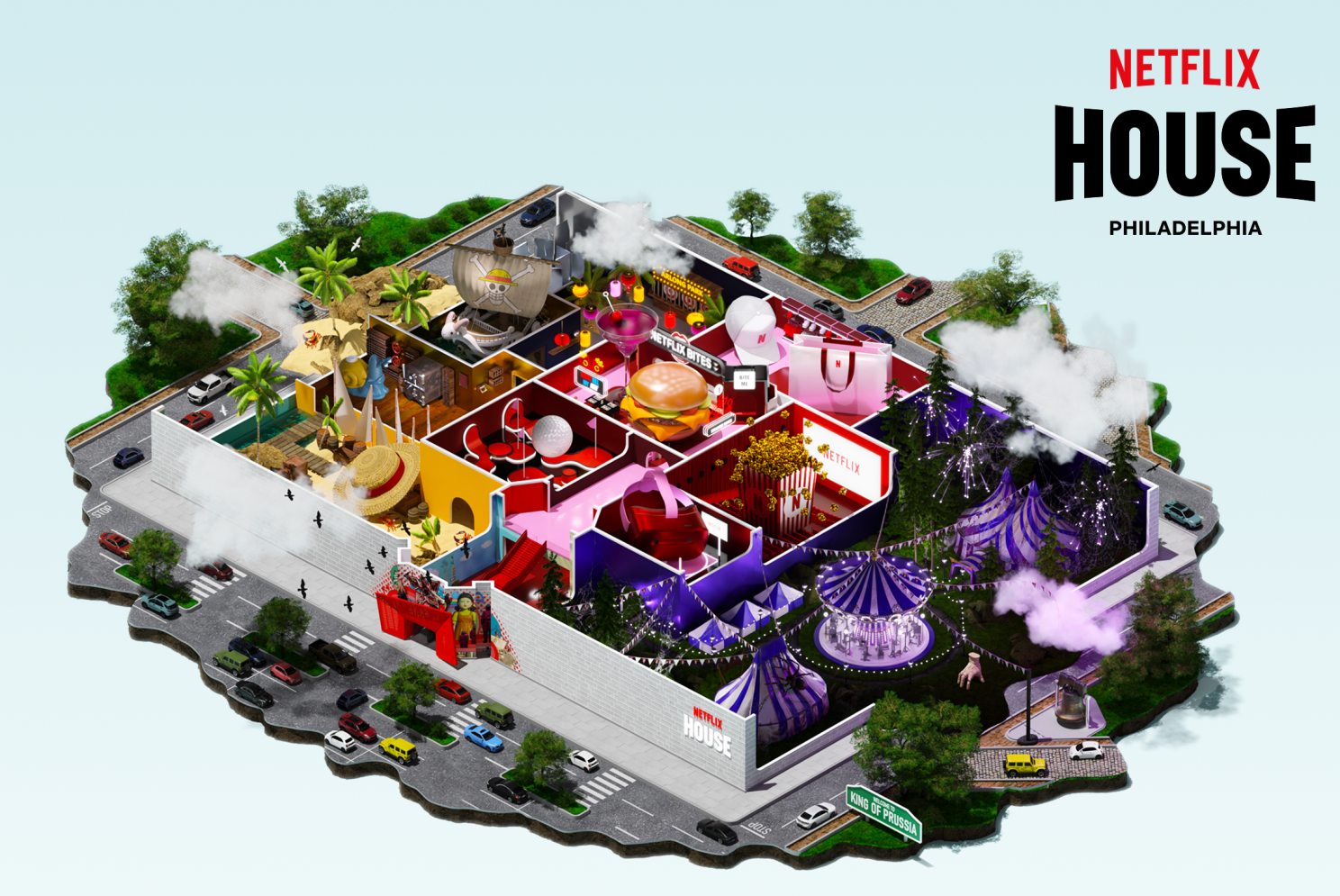
Netflix, the streaming behemoth, is flipping the script on its digital-only model with Netflix Houses—sprawling, permanent venues that immerse fans in hit shows. The first opened in King of Prussia, Pennsylvania, in November 2025, followed by Dallas in December, with Las Vegas eyed for 2027. Housed in repurposed department stores (over 100,000 square feet each), these spaces feature rotating activations: dance in a Bridgerton ballroom, escape a Stranger Things Upside Down, or dine at Netflix Bites with show-inspired cuisine like Squid Game dalgona cookies.
The strategy is multifaceted. It combats churn in a saturated streaming market by fostering community—think fan meetups and live events. Retail elements, from merch shops to themed pop-ups, generate direct revenue, while data from app integrations (e.g., scanning QR codes for personalized recommendations) refines content algorithms. As Netflix's VP of Consumer Products noted, "We're creating places where fans can step into the story," aligning with a broader push into experiential entertainment. Early metrics show promise: Similar pop-ups have driven 20% uplifts in viewership for featured titles.
Andy Nguyen: Redefining Culinary IP with Pop-Up Success
In the culinary world, Andy Nguyen stands out as a trailblazer using IP-based food pop-ups to build brands that resonate with fans and generate buzz. Nguyen, a Los Angeles-based restaurateur, has mastered the art of the pop-up, leveraging cultural IPs and nostalgia to create viral dining experiences that transition into lasting ventures. His most notable success is Bopomofo Cafe, a bubble tea and Asian-inspired eatery that started as a pop-up in 2017 and became a permanent fixture in Southern California. Bopomofo's playful branding, tied to Asian pop culture and street food, drew massive crowds through social media hype, with lines stretching hours long at early events.
Nguyen's genius lies in his ability to fuse IP with authenticity. His Dragon Ball Z-themed pop-up, for instance, transformed a San Gabriel Valley space into a vibrant homage to the anime, complete with themed drinks like "Goku's Bubble Blast" and decor inspired by the show's iconic settings. The event sold out in days, driven by Instagram and TikTok posts from fans, and led to partnerships with anime conventions for repeat activations. Similarly, his collaboration with Riot Games for a League of Legends-inspired pop-up at esports events paired in-game aesthetics with dishes like "Mana Potion Boba," creating a cultural touchpoint for gamers. These pop-ups consistently generated 30-40% profit margins after costs, per industry reports, and paved the way for Nguyen's expansion into brick-and-mortar locations.
Nguyen's approach mirrors media companies' strategies: use IP to draw crowds, then convert buzz into long-term brand loyalty. His pop-ups, often hosted in shared kitchens or festivals, keep overhead low while maximizing exposure. Data from his ventures shows social media engagement rates 50% higher than traditional restaurants, with 25% of attendees becoming repeat customers at permanent locations. Nguyen's success underscores how IP-driven food pop-ups can serve as low-risk testing grounds, enabling entrepreneurs to scale concepts into full-fledged brands.
Beyond Universal, Netflix, and Nguyen: Emerging Media Players
Media companies aren't stopping at horror and hits. Warner Bros. Discovery has expanded with interactive experiences like the Harry Potter: A Forbidden Forest Experience, a touring outdoor adventure blending AR and live actors. Disney, already a theme park titan, is innovating with smaller-scale retail like the Star Wars: Galaxy's Edge trading posts, where guests "build" lightsabers. Even non-traditional media like video game publishers—e.g., Nintendo's flagship stores with playable demos and character meet-and-greets—are blurring lines.
Retail media networks (RMNs) add another layer. While primarily ad-focused, platforms like Amazon Ads and Walmart Connect are incorporating experiential elements, such as in-store demos tied to media campaigns. Nestlé's partnership with WHSmith for airport activations promoting Essentia water exemplifies "experiential retail media," merging branding with immersive sampling. With 252 RMNs worldwide as of January 2025, this hybrid model is projected to hit $179.5 billion globally.
Consumer Brands Lead the Charge: Lessons from Immersive Pioneers
While media companies adapt, consumer brands have honed experiential retail for years, treating stores as brand embassies. These spaces prioritize discovery, customization, and community, often yielding higher ROI through extended visits and user-generated content.
Iconic Examples: Nike, American Girl, and More
Nike's House of Innovation exemplifies tech-infused immersion. In New York City, visitors use the Nike app for personalized fittings, test sneakers on digital tracks, and customize products in real-time. This "phygital" approach—blending physical and digital—has boosted sales by 15-20% in flagship locations.
American Girl Place turns doll shopping into a family ritual with salons, cafes, and themed parties, fostering emotional bonds that span generations. Hershey's Chocolate World in Pennsylvania offers factory tours, workshops, and rides, drawing 3 million visitors annually and extending the brand beyond confectionery.
Other standouts include Apple's minimalist stores, where hands-on demos make tech approachable; Vans' House of Vans with skate parks and concerts; and Gentle Monster's art-gallery-like eyewear boutiques with robotic installations. Unilever and CoverGirl have revitalized stores with AR mirrors and interactive beauty labs. Even STORY at Macy's rotates themes like a magazine, featuring brands like Crayola in experiential pop-ups.
The Data Behind Success
These aren't vanity projects. Experiential retail drives mid-single-digit growth for the industry in 2025, with vacancy rates steady at 4.1% as brands prioritize interaction. Health and wellness tie-ins, projected at $7 trillion globally, further amplify appeal, as seen in AT&T's tech-forward retail activations.
Navigating Challenges: The Roadblocks to Immersive Success
Despite the allure, experiential retail isn't without hurdles. High upfront costs—technology, design, staffing—can strain budgets, especially for smaller brands. Implementation challenges include maintaining freshness (rotating experiences to avoid staleness) and measuring ROI beyond foot traffic. Inclusivity is key: Designs must accommodate diverse needs, from accessibility to cultural sensitivity.
Digital integration adds complexity—ensuring seamless omnichannel experiences without overwhelming staff. And in a post-COVID era, health protocols remain vital. Brands like Gibson and Ralph Lauren overcome this by partnering with experiential agencies for scalable solutions.
The Future Horizon: AI, Sustainability, and Beyond
Looking ahead, AI will supercharge experiential retail—personalized recommendations, virtual try-ons, and predictive analytics. Sustainability will dominate, with eco-friendly designs and ethical sourcing. Pop-ups in unconventional spaces (arenas, airports) will proliferate, and hybrid models blending VR with physical will emerge.
For media and consumer brands, the message is clear: Authenticity wins. As retail evolves, those who create genuine, memorable connections will thrive in this $543 billion arena.
In conclusion, from Universal's chilling haunts to Nguyen's anime-inspired pop-ups to Nike's innovative hubs, experiential retail is redefining brand expansion. It's a reminder that in our digital age, the human touch—amplified by technology—remains irreplaceable. As 2025 unfolds, watch for more brands to step off the screen and into the streets. What's next for your favorite brand? The immersion awaits.